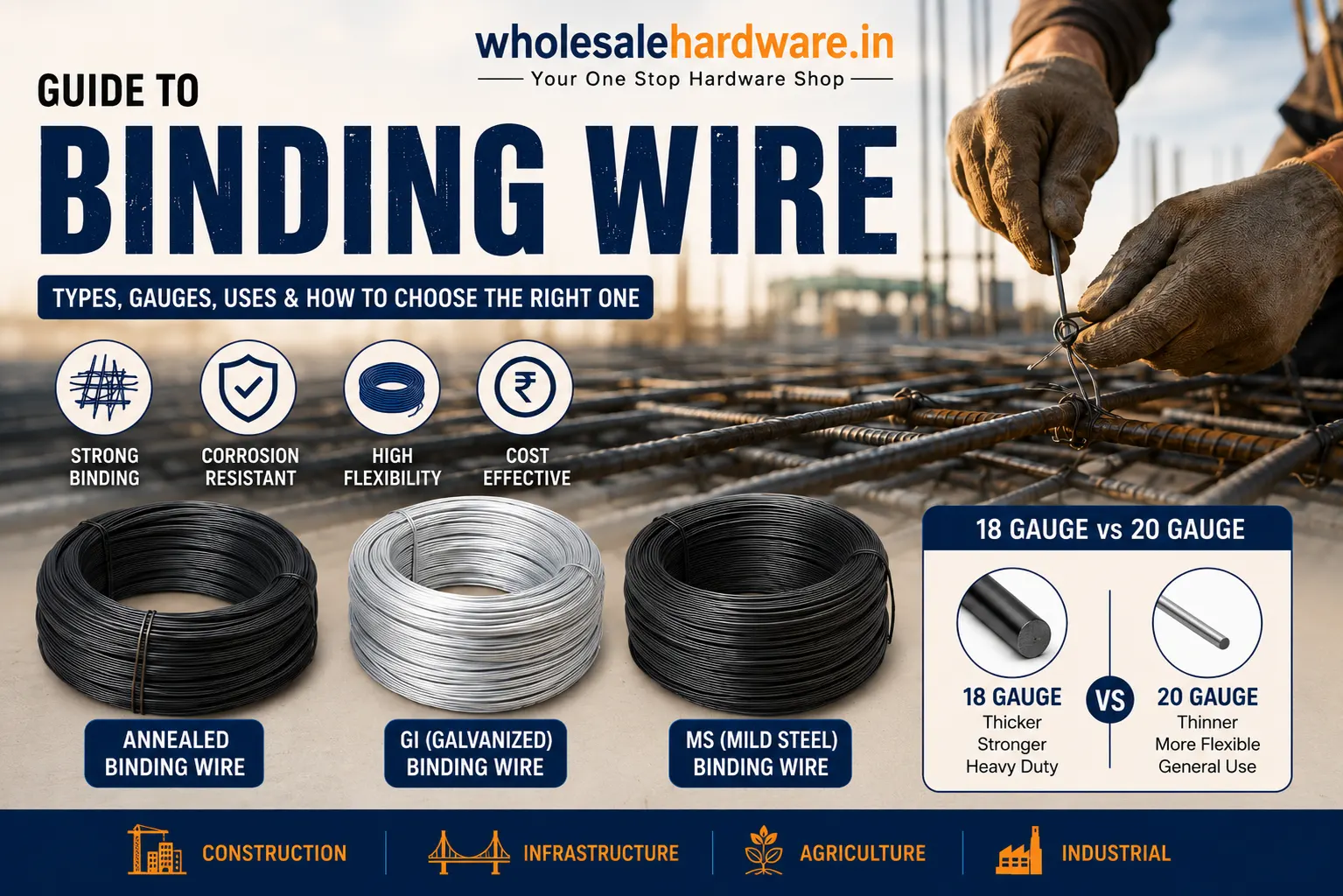
Whether you’re working on an RCC slab, tying reinforcement bars, securing fencing, or handling general construction work, choosing the right binding wire is more important than many people realize.
Workers use binding wire to hold steel reinforcement bars securely in place before pouring concrete. The correct wire improves productivity, provides a secure tie, reduces material wastage, and helps ensure the stability of reinforcement during construction.
However, with different wire gauges, materials, and applications available, selecting the right binding wire can be confusing.
In this binding wire buying guide, you’ll learn:
- What binding wire is
- Different types of binding wire
- Common wire gauges and their uses
- How to choose the right binding wire
- Mistakes to avoid while buying
- Frequently asked questions
Whether you’re a contractor, builder, engineer, hardware dealer, or DIY user, this guide will help you choose the right binding wire for your project.
Quick Buying Guide
| If you need… | Recommended Binding Wire |
|---|---|
| RCC slab reinforcement | 18 Gauge Binding Wire |
| General construction work | 20 Gauge Binding Wire |
| Better corrosion resistance | GI Binding Wire |
| Everyday reinforcement tying | Annealed Binding Wire |
| Budget-friendly applications | MS Binding Wire |
What is Binding Wire?
Workers use binding wire to tie reinforcement bars (rebars) together before pouring concrete. It helps keep the reinforcement cage stable during construction, ensuring the bars remain in the correct position until the concrete sets.
Builders use binding wire in residential construction, commercial buildings, bridges, roads, industrial projects, agricultural fencing, and general fabrication work.. Because it is flexible and easy to twist, workers can quickly secure reinforcement bars without the need for specialised tools.
The choice of binding wire depends on factors such as wire gauge, material, corrosion resistance, and the type of construction project.
Types of Binding Wire
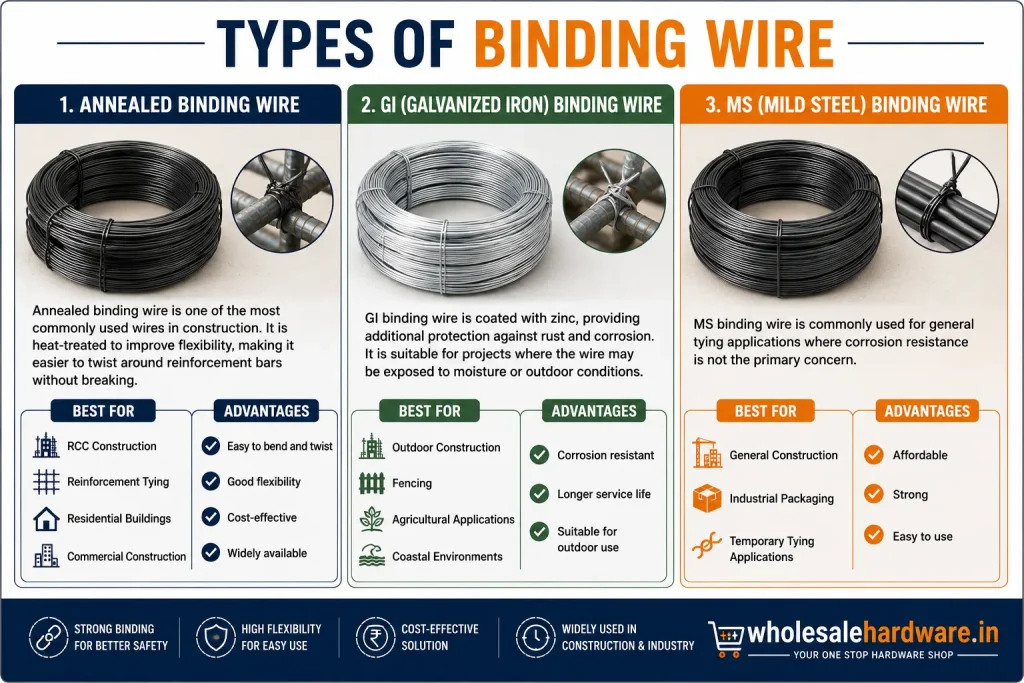
1. Annealed Binding Wire
Annealed binding wire is one of the most commonly used wires in construction. It is heat-treated to improve flexibility, making it easier to twist around reinforcement bars without breaking.
Best For
- RCC construction
- Reinforcement tying
- Residential buildings
- Commercial construction
Advantages
- Easy to bend and twist
- Good flexibility
- Cost-effective
- Widely available
2. GI (Galvanized Iron) Binding Wire
GI binding wire is coated with zinc, providing additional protection against rust and corrosion. It is suitable for projects where the wire may be exposed to moisture or outdoor conditions.
Best For
- Outdoor construction
- Fencing
- Agricultural applications
- Coastal environments
Advantages
- Corrosion resistant
- Longer service life
- Suitable for outdoor use
3. MS (Mild Steel) Binding Wire
MS binding wire is commonly used for general tying applications where corrosion resistance is not the primary concern.
Best For
- General construction
- Industrial packaging
- Temporary tying applications
Advantages
- Affordable
- Strong
- Easy to use
18 Gauge vs 20 Gauge Binding Wire
Choosing the correct gauge is just as important as selecting the right material.
| Feature | 18 Gauge | 20 Gauge |
|---|---|---|
| Thickness | Thicker | Thinner |
| Strength | Higher | Moderate |
| Flexibility | Moderate | Higher |
| Common Use | Heavy reinforcement | General construction |
| Material Usage | More | Less |
Choose 18 Gauge If:
- Heavy reinforcement is involved.
- The project requires stronger tying.
- Large RCC structures are being constructed.
Choose 20 Gauge If:
- General reinforcement work is being carried out.
- Flexibility is more important.
- Material cost needs to be reduced.
Common Applications of Binding Wire
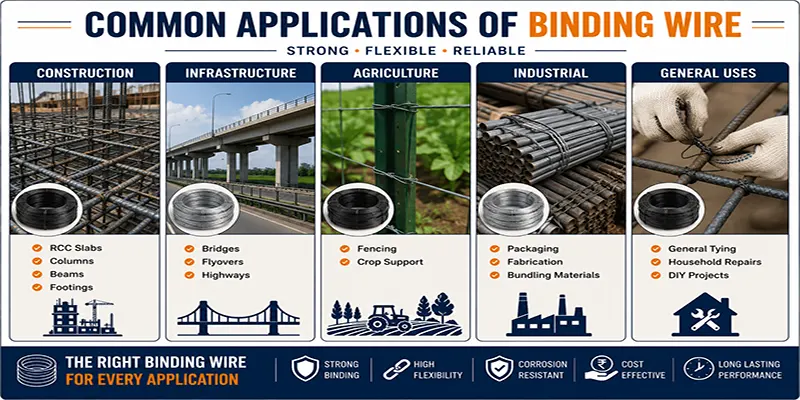
Binding wire is widely used across various industries.
Construction
- RCC slabs
- Columns
- Beams
- Footings
Infrastructure
- Bridges
- Flyovers
- Highways
Agriculture
- Fencing
- Crop support
Industrial
- Packaging
- Fabrication
- Bundling materials
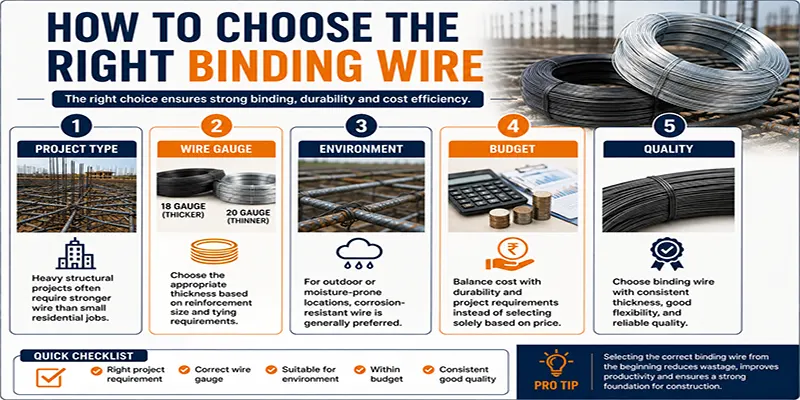
How to Choose the Right Binding Wire
Before purchasing binding wire, consider the following factors.
1. Project Type
Heavy structural projects often require stronger wire than small residential jobs.
2. Wire Gauge
Choose the appropriate thickness based on reinforcement size and tying requirements.
3. Environment
For outdoor or moisture-prone locations, corrosion-resistant wire is generally preferred.
4. Budget
Balance cost with durability and project requirements instead of selecting solely based on price.
5. Quality
Choose binding wire with consistent thickness, good flexibility, and reliable manufacturing quality.
Common Buying Mistakes
Avoid these common mistakes when purchasing binding wire:
- Buying the wrong wire gauge.
- Ignoring corrosion resistance for outdoor projects.
- Choosing based only on price.
- Purchasing poor-quality wire that breaks easily.
- Not estimating the required quantity before placing an order.
Selecting the correct binding wire from the beginning can help reduce wastage, improve productivity, and support efficient construction work.
Frequently Asked Questions
What is binding wire used for?
Binding wire is primarily used to tie reinforcement bars together before concrete is poured. It is also used in fencing, packaging, and industrial applications.
Which binding wire is best for construction?
Annealed binding wire is widely used for reinforcement tying due to its flexibility, while GI binding wire is commonly chosen where corrosion resistance is important.
What is the difference between 18 gauge and 20 gauge binding wire?
18 gauge wire is thicker and stronger, whereas 20 gauge wire is thinner and offers greater flexibility for lighter applications.
Can binding wire rust?
Some types of binding wire can rust over time. Galvanized binding wire offers better corrosion resistance than untreated steel wire.
How do I choose the correct binding wire?
Consider the project type, required strength, environmental conditions, and wire gauge before making your decision.
Is binding wire reusable?
In many construction applications, binding wire is intended for a single use once the reinforcement is secured.
Final Thoughts
Binding wire may appear to be a simple construction material, but choosing the correct type and gauge can improve efficiency, reduce material wastage, and ensure reinforcement remains securely tied during construction.
Before purchasing, evaluate your project requirements, working environment, and preferred wire gauge to select the most suitable binding wire for the job.
🔍 You May Also Like
If you found this guide helpful, you may also be interested in:
- Hammer Buying Guide
- Measuring Tapes
- Hand Tools and Power Tools Buying Guide
- Yellow PP Rope – Complete Buying Guide
- Cutting Wheel Buying Guide (Coming Soon)
- Measuring Tools Used in Construction (Coming Soon)
🔧 Explore More Hardware Categories
Looking for more products? Browse our categories:
📞 Need Help Choosing the Right Binding Wire?
Not sure which binding wire is best for your project?
Our team can help you choose the right products based on your requirements, whether you’re purchasing for construction, engineering projects, fabrication, industrial use, or bulk wholesale orders.
📞 Contact Our Experts
📱 Call / WhatsApp: +91 9951836524
🌐 Website: https://wholesalehardware.in
📞 Contact Us: https://wholesalehardware.in/contact-us/
📢 WhatsApp Channel: https://whatsapp.com/channel/0029Vb7kFcPGzzKK5wfKhf0Q
📘 Facebook: https://www.facebook.com/wholesalehardware.in/
📷 Instagram: https://www.instagram.com/wholesalehardware.in/